
The Camel’s Back

MONTHLY NEWSLETTER | May 2026
The straw doesn’t break the camel’s back because it is heavy. It breaks it because the load was already too much.
Last month, I shared how I used AI to rebuild my photography workflow over a single weekend — and how that experience quietly reframed the way I think about these tools. Not as instruments of productivity, but as potential companions in reclaiming what matters.
That reframe followed me into every coaching conversation I’ve had since.
Because the leaders I work with are not asking me about AI in the abstract. They are asking something far more human.

WHAT I’M HEARING IN THE ROOM
How do we even do this?
My team is already exhausted — how do I ask more of them?
Leadership wants us to accelerate our use of AI, but no one has defined what success looks like.
And if we experiment and fail, we won’t just be wrong. We’ll be made an example of.
I want to sit with that last one for a moment. Because it is not an isolated sentiment. I hear variations of it constantly, across industries, across levels, across organizations that look very different from the outside.
Fear of visible failure is not a personality trait. It is a cultural condition. And it tells us something important — not about the people asking these questions, but about the systems they are operating inside.
What these leaders are describing is not an AI problem.
It is a leadership model problem. And AI has just made it impossible to look away.
People are not resisting change because they lack capability — they’re resisting environments where it no longer feels safe to fail.
THE DOOR THAT WAS ALREADY OPEN
We have been here before.
In 2020, the pandemic forced something remarkable. Almost overnight, leaders had to let go of the illusion of control. Hierarchies flattened out of necessity. Vulnerability became visible. People led from their living rooms with children in the background and uncertainty in the air, and somehow — many of them led better. More humanly. More honestly.
Those of us who had been advocating for a different kind of leadership watched with cautious hope. It looked, for a moment, like the shift had finally arrived.
And then, gradually, the old system reasserted itself.
The offices refilled. The armour went back on. The language of acceleration and performance and efficiency returned — louder, if anything, than before. Command and Control did not evolve. It simply paused.
I was not surprised. Disappointed, but not surprised. Because as organizational theorist Frederic Laloux has long argued, systems cannot grow beyond the inner development of the people leading them. Without that deeper shift, structures revert. The door cracked open — and then quietly closed again.
What is different now is that AI is holding the door open. And it does not have the patience the pandemic did.
WHAT THE RESEARCH IS TELLING US
BetterUp Labs recently published findings from one of the most comprehensive workforce studies I have encountered — tracking over 410,000 employees across industries from 2019 to 2024. The data is worth pausing with.
Performance, across every level and sector, has been in decline. Significantly.
But the most striking finding is not the decline itself. It is where the decline is steepest.
BetterUp identifies three types of performance: basic performance (task execution), collaborative performance (the interpersonal and organizational behaviours that drive collective results), and adaptive performance (the creativity, agility, and connectivity required to navigate novelty and complexity). Of the three, adaptive performance is experiencing the sharpest drop. The more human the skill, the steeper the fall.
This matters enormously, because adaptive performance is precisely what the age of AI demands most.
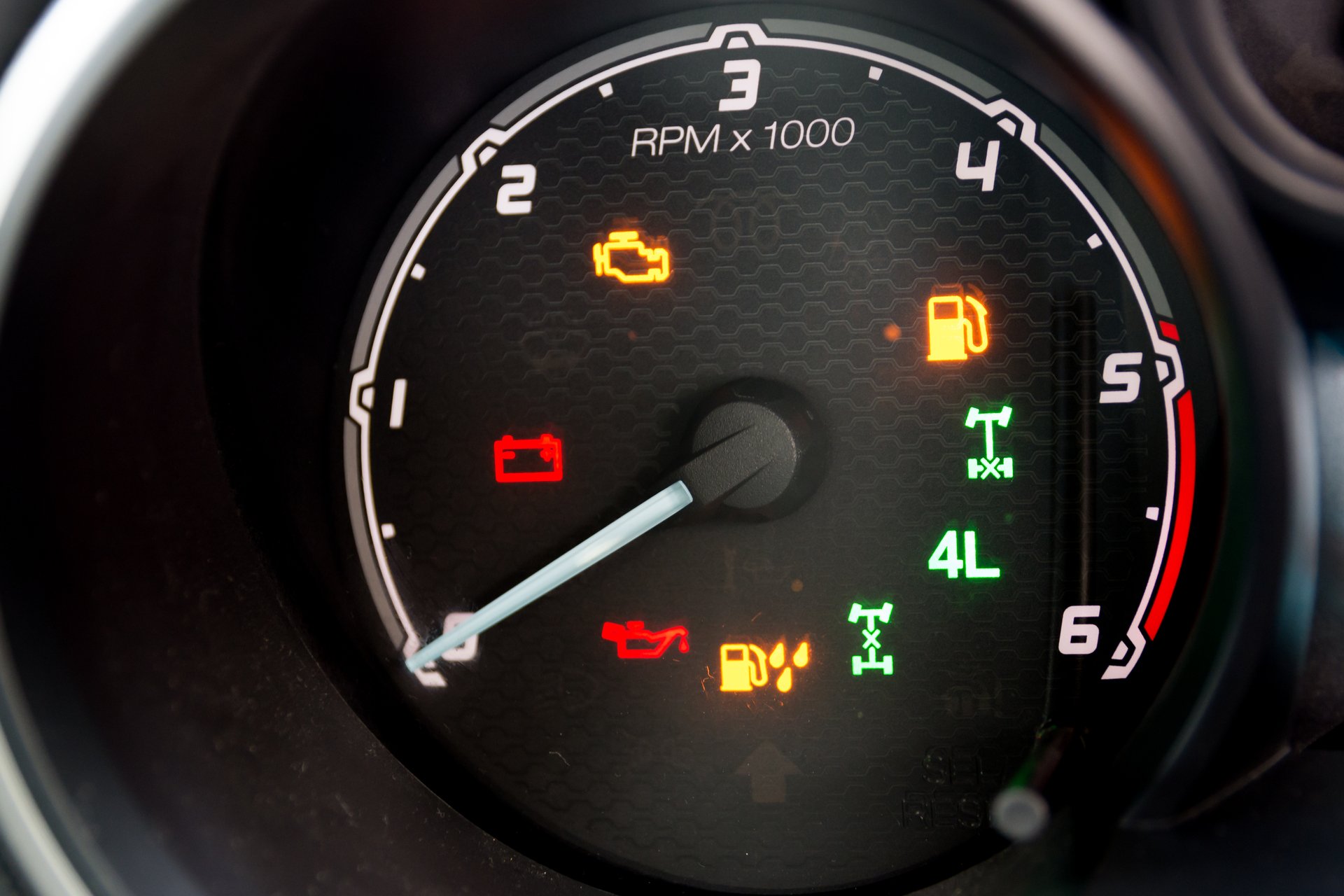
Beneath all three performance types, the research identifies a shared underlying capacity — what BetterUp calls fuel: the psychological and emotional resources that enable people to engage, contribute, and sustain high performance. Fuel is comprised of three elements: motivation, optimism, and agency. And since 2017, fuel has been eroding more rapidly than any other factor in the study.
This is not burnout. Burnout is a depletion event. What BetterUp is describing is a systemic erosion of human capacity — slower, quieter, and far more consequential.
Alexi Robichaux, CEO and co-founder of BetterUp, named this plainly in his keynote at Uplift 2026: the answer to the performance crisis starts with mattering. People must believe that their work, their judgment, and their presence are genuinely significant — not just to the organization’s output, but to the people around them.
Mattering is not a soft concept. It is, as researcher Isaac Prilleltensky’s work demonstrates, a fundamental human need — as essential to flourishing as belonging, and far more neglected. And it is nearly impossible to cultivate inside a Command and Control culture, where decisions flow downward and deviation is punished.
The fuel is running low. And the tank has a leak called you don’t matter here.
PILOTS AND PASSENGERS
There is one more finding from the BetterUp research that I keep returning to.
In organizations where AI adoption is mandated but poorly communicated, employees comply. They become, in the report’s language, passengers — using AI to avoid doing the work themselves, disengaged from the deeper possibilities the tools offer.
In organizations where leaders communicate with clarity, confidence, and genuine care, employees become pilots — using AI to enhance their creativity, expand their capabilities, and take ownership of how these tools serve their work. The difference in outcomes is not marginal. Organizations where leaders communicate well around AI report satisfaction levels twenty-one times higher than those where communication is absent or authoritarian.
Twenty-one times.
The variable is not the technology. It is the leader.
This is precisely where Amy Edmondson’s work on psychological safety becomes indispensable. Edmondson’s research demonstrates consistently that without safety to experiment, fail, and learn, there is no genuine innovation. The leaders I work with are not resisting AI. They are making a rational calculation inside systems that punish risk. That is not a personal failing. It is a structural one — and it belongs to the leaders at the top of those systems.
Skills training will not solve this. You cannot train your way into adaptive performance if the underlying fuel — the sense that effort matters, that people matter — is running on empty.
The future of leadership may depend less on control — and more on whether people feel they truly matter.
THE REFRAME
Here is where I find myself sitting with cautious optimism.
AI may accomplish what the pandemic could not. Not because it is more powerful than a global crisis, but because it is permanent. It is accelerating. And it does not offer a return to normal on the other side.
Leaders cannot wait this one out.
That constraint — uncomfortable as it is — may finally create the conditions for the transformation that has always been overdue. Laloux’s work reminds us that organizational models must evolve to match the complexity of the era they inhabit. The predict-and-control paradigm was built for a different world. It has exceeded its best-before date by years, perhaps decades. AI is not the cause of its failure. It is simply the force that makes the failure undeniable.
The door that cracked open in 2020 is being pushed fully open now.
The question is no longer whether to walk through it.
AN INVITATION — IN THREE DIRECTIONS
If any of this has landed close to home, I’d like to offer you three places to take it.
Inward first. Where are you operating from right now — as a pilot or a passenger? And more importantly: does the culture you have built invite the people around you to be pilots? Where, honestly, has the need for control been quietly draining the fuel from your team?
Then outward. What would it take to create enough safety for genuine experimentation in your organization? What would change if the people on your team genuinely believed that their judgment mattered — that a failed experiment was a data point, not a character verdict?
And if you’re ready for support. This kind of inflection point — where the old model is clearly breaking down and the new one isn’t yet clear — is exactly the terrain that coaching is designed for. The leaders I work with don’t need someone to hand them a roadmap. They need a thinking partner steady enough to sit in the uncertainty with them, and ask the questions that move things forward.
That is work I would be honoured to do with you.
I’ll leave you with a question to carry into your week:
If the people on your team were asked whether they truly matter here — not to the mission statement, but to you — what would they say?

Sources mentioned:
BetterUp Labs, Winning in the Age of AI: Transforming Workforce Performance
Amy Edmondson, The Fearless Organization
Frederic Laloux, Reinventing Organizations
Isaac Prilleltensky’s work on mattering